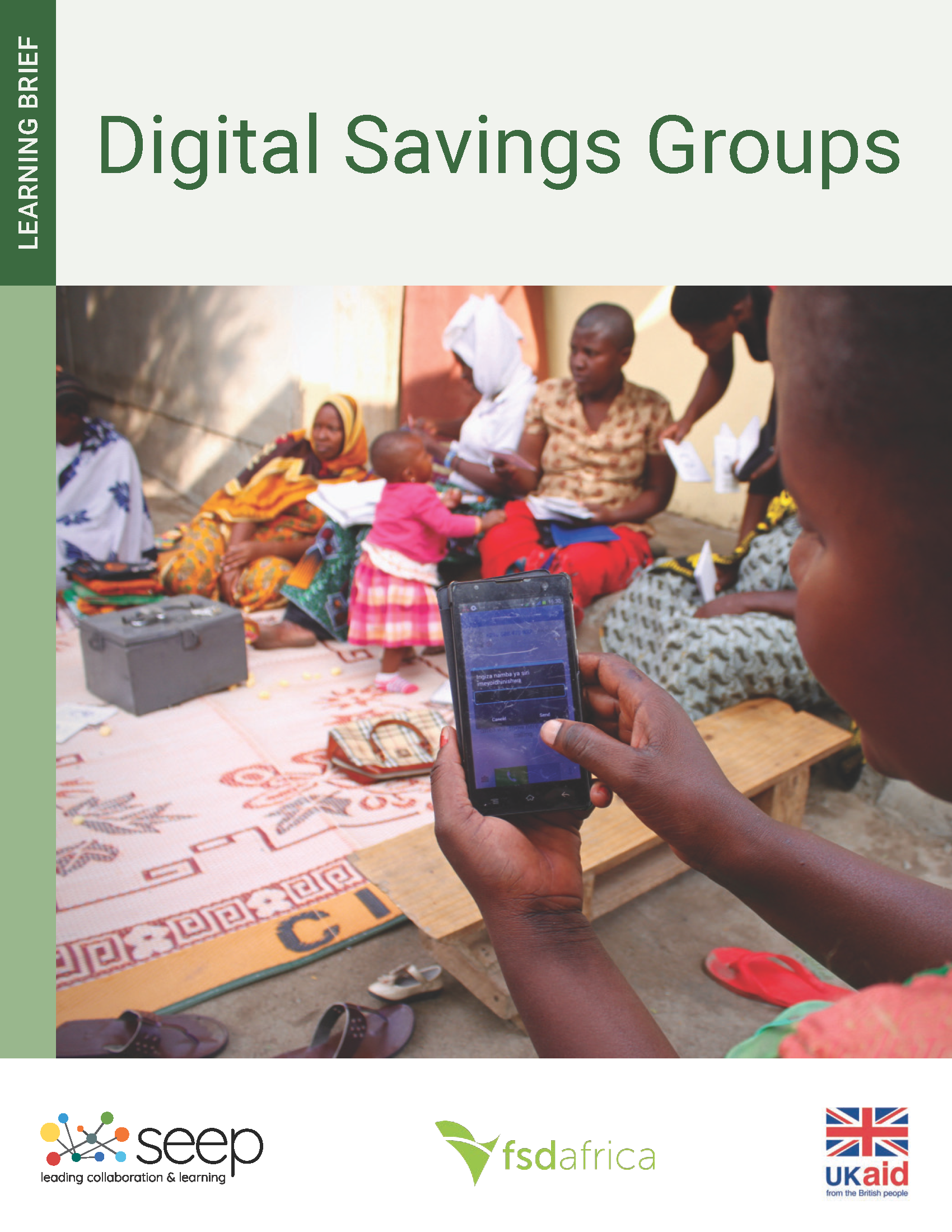
This learning brief examines the design options and essential tradeoffs in solution development based on a survey of 12 digital savings group (DSG) solution providers. The findings are outlined in six sections: 1) Introduction; 2) The benefits of savings groups; 3) User experience; 4) The business of DSGs; 5) Consumer protection, and 6) What will successful groups look like? These sections cover a wide range of topics, including digital, social, financial, and economic inclusion, the accuracy of records, security of funds, data privacy and security, and costs of implementing and participating in DSGs. Findings indicate that the success of DSGs relies on the sustainability of both solutions and providers. While the prospect of serving hundreds of millions of people and expanding the impact of savings groups justifies the effort and investment in digital solutions, patience and prudence are required to protect the interests of users along the way.
The brief will be helpful to institutions that recognize the commercial potential of new digital approaches for savings groups. The target audience for this brief includes non-governmental organizations implementing DSGs as well as private sector actors including impact investors, microfinance investment funds, banks, non-bank lenders, and mobile network operators. FinTech innovators may also find this document useful for identifying new opportunities and risks in developing digital solutions for savings groups.