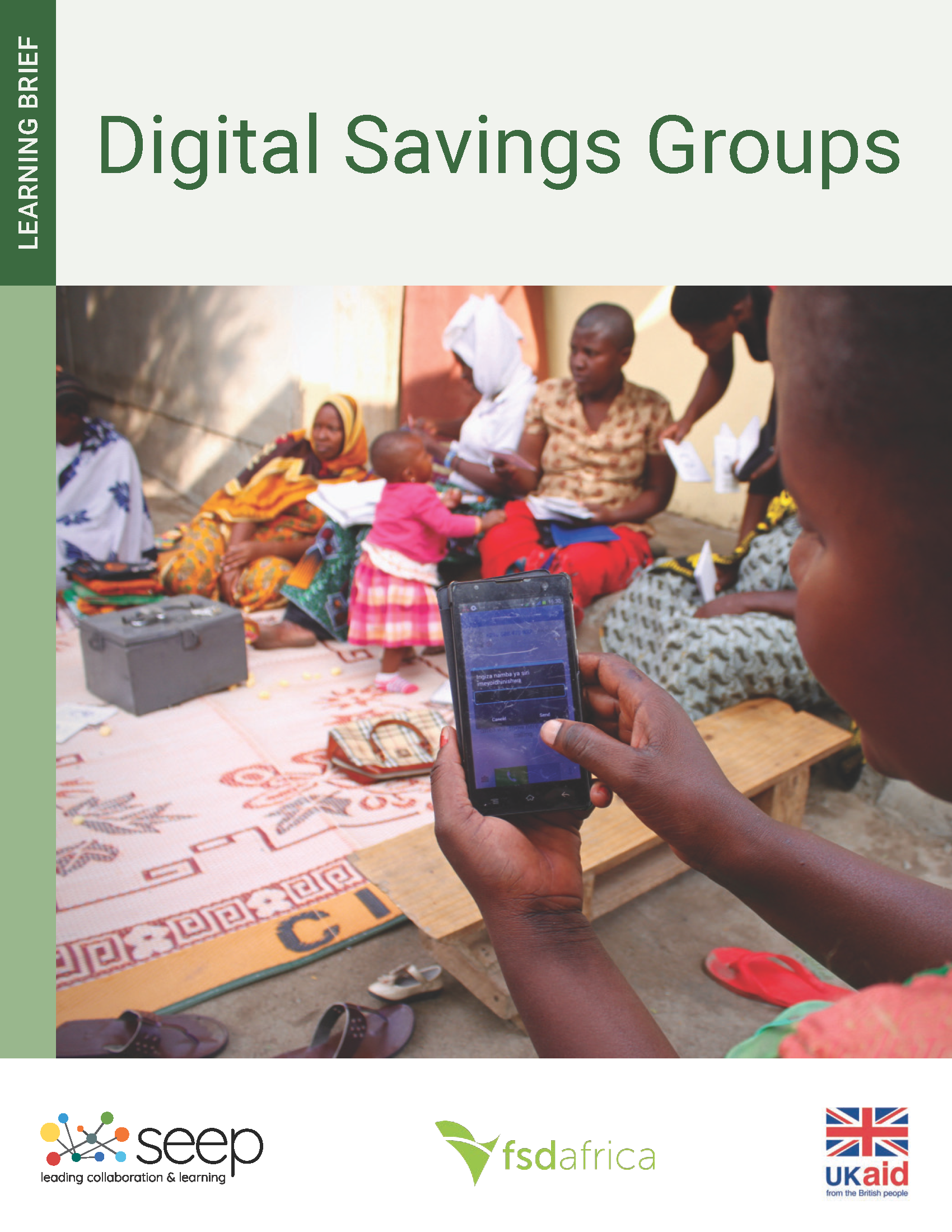
2a. SEEP LearningBrief COVER

This learning brief examines the design options and essential tradeoffs in solution development based on a survey of 12 digital savings group (DSG) solution providers. The findings are outlined in six sections: 1) Introduction; 2) The benefits of savings groups; 3) User experience; 4) The business of DSGs; 5) Consumer protection, and 6) What will successful groups look like? These sections cover a wide range of topics, including digital, social, financial, and economic inclusion, the accuracy of records, security of funds, data privacy and security, and costs of implementing and participating in DSGs. Findings indicate that the success of DSGs relies on the sustainability of both solutions and providers. While the prospect of serving hundreds of millions of people and expanding the impact of savings groups justifies the effort and investment in digital solutions, patience and prudence are required to protect the interests of users along the way.

The brief will be helpful to institutions that recognize the commercial potential of new digital approaches for savings groups. The target audience for this brief includes non-governmental organizations implementing DSGs as well as private sector actors including impact investors, microfinance investment funds, banks, non-bank lenders, and mobile network operators. FinTech innovators may also find this document useful for identifying new opportunities and risks in developing digital solutions for savings groups.
Leave a Reply

View all comments

Related Resources

Read
article
digital divide Digital Inclusion Digitization Benefits Digitization Risks & Barriers
BFA article
article
digital divide Digital Inclusion Digitization Benefits Digitization Risks & Barriers

Digital Savings Groups can Help Women Finally Bridge the Financial Gender Gap

By Sushmita Meka, Sally Ross & Daryl Collins
BFA Global
2018

Digital Savings Groups can Help Women Finally Bridge the Financial Gender Gap

This article discusses the persistent gender gap in access to financial services and digital technologies. The key to closing both gaps may be found in savings groups, according to BFA, the Aga Khan Foundation (AKF), Financial Sector Deepening Trust Tanzania (FSDT), and the Bill & Melinda Gates Foundation. Most savings groups are cash-based. But if […]
Read
Research
Financial Inclusion
dsg default resource
Research
Financial Inclusion

Impact of the Child-Optimized Financial Education (COFE) Curriculum among Savings Group Participants in Uganda: A Cluster Randomised Controlled Trial

By Eunsoo Timothy Kim, Yunji Zhou, Levicatus Mugenyi, Margaret Lillie, John Kato Bbosa, Collins Agaba, Andrew Mijumbi Ojok, John Hembling, Godfrey Kalemera Ruhangawebare, Carrie Miller, Thomas K. Shaw, Benjamin S. Allen, Joseph R. Egger, John A. Gallis, Joy Noel Baumgartner
Journal of Development Effectiveness
2025

Impact of the Child-Optimized Financial Education (COFE) Curriculum among Savings Group Participants in Uganda: A Cluster Randomised Controlled Trial

A randomized controlled trial in Uganda evaluated the Child-Optimized Financial Education (COFE) curriculum delivered through Savings and Internal Lending Communities (SILC). Results show that COFE significantly increased caregivers’ ability to pay for children’s school expenses compared to SILC-only groups. However, COFE did not significantly affect health-related spending or financial self-efficacy. Findings suggest that child-focused financial education can improve educational outcomes for vulnerable households.