
Research
Digital Inclusion Gender

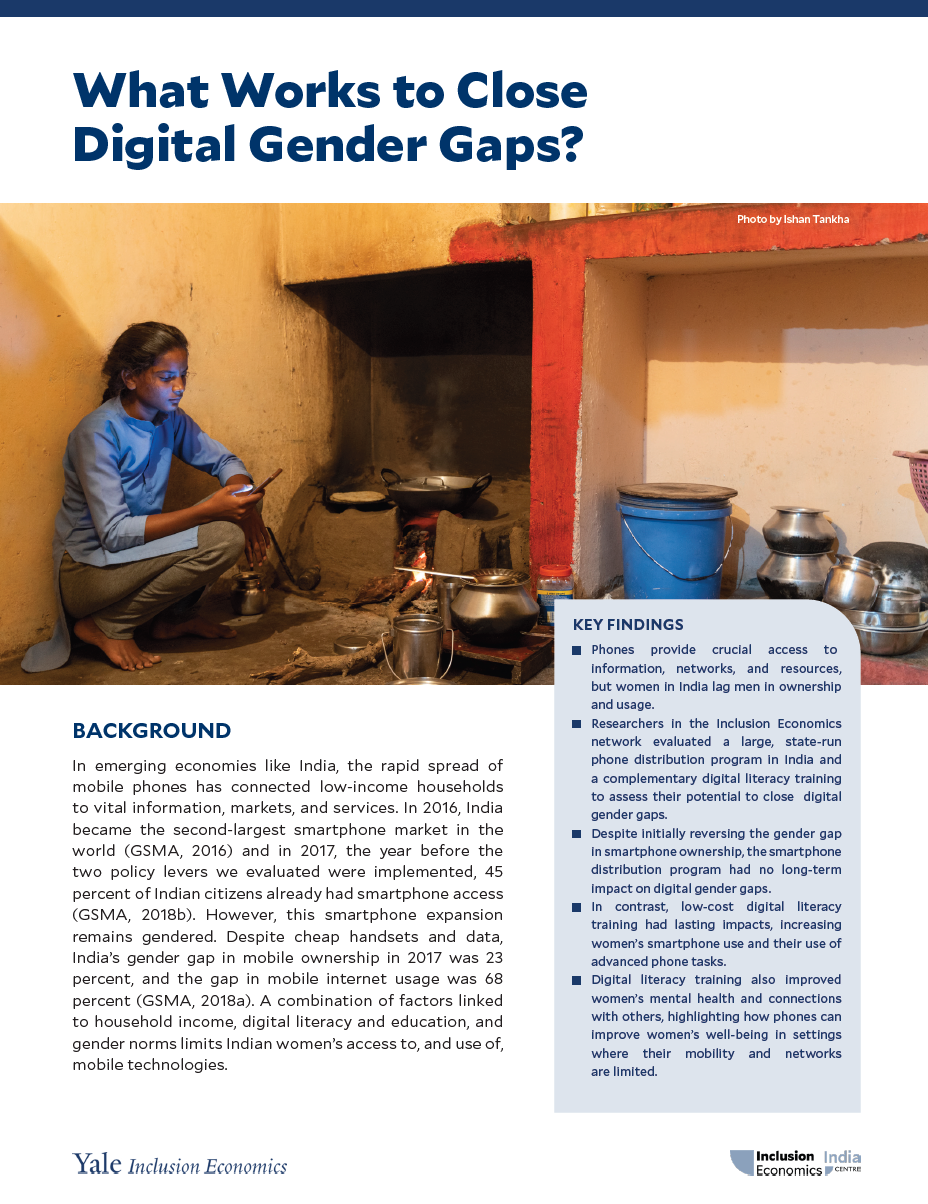
What Works to Close Digital Gender Gaps?

Published by
Charity Troyer-Moore, Giorgia Barboni, Erica Field, Rohini Pande, Natalia Rigol, Simone Schaner, Erik Jorgensen, Hemawathy Balarama
2025
Yale Inclusion Economics
View Resource

In rural India, researchers from Yale Inclusion Economics studied the effectiveness of two major interventions aimed at closing the digital gender gap: a state-run smartphone distribution program and a complementary digital literacy training. While the distribution of over two million free smartphones initially increased women’s phone ownership and advanced usage, these gains faded over time. In contrast, short, low-cost digital literacy trainings had a more durable effect—boosting women’s use of smartphones for advanced tasks and strengthening their social connections and mental health years later.

The study offers practical insights for policymakers and development practitioners: technology access alone is not enough. Programs must also address gendered barriers to usage—like digital literacy, confidence, and social norms—to create meaningful and lasting inclusion.

What Works to Close Digital Gender Gaps? presents key findings, policy lessons, and implications for digital inclusion efforts in low-resource settings.

Leave a Reply

View all comments

Related Resources

Read
Multimedia
Digital Financial Services Digital Inclusion Digital Payments Digital Transformation
Capital Musing image
Multimedia
Digital Financial Services Digital Inclusion Digital Payments Digital Transformation

Capital Musings Podcast Show

UN Capital Development Fund (UNCDF)
2023

Capital Musings Podcast Show

The UN Capital Development Fund (UNCDF) started its podcast show, Capital Musings, in September 2019 to platform individuals driving impact and change in the area of “last mile” finance models that unlock public and private resources to reduce poverty and support local economic development. All episodes can be found the Capital Musings website. While every […]
Read
Brief
Digital Inclusion Digitization Planning Digitization Risks & Barriers Gender
Brief
Digital Inclusion Digitization Planning Digitization Risks & Barriers Gender

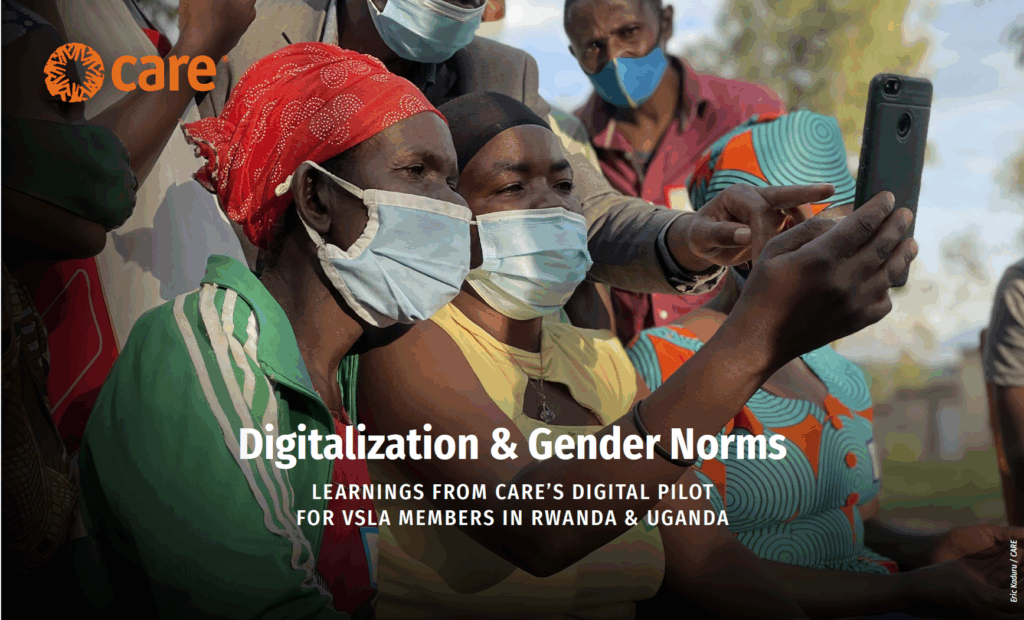
Digitalization & Gender Norms: Learnings from CARE’s Digital Pilot for VSLA Members in Rwanda & Uganda

By Eric Kaduru
CARE
2025

Digitalization & Gender Norms: Learnings from CARE’s Digital Pilot for VSLA Members in Rwanda & Uganda

Insights from CARE’s digital pilot with 100 VSLA groups in Rwanda and Uganda reveal how social norms limit women’s digital access—and what it takes to design safer, more inclusive digitalization efforts.