FIW 2022 Banner for Hub
Multimedia
Digital Inclusion Digital Transformation Digitization Benefits Digitization Risks & Barriers Gender Social Inclusion

Savings Groups in the Digital Era: Promoting Gender-Responsive & Inclusive Digital Transformation

Published by
Paula Rudnicka & Dennis Mello
2022
Global Communities
View Resource

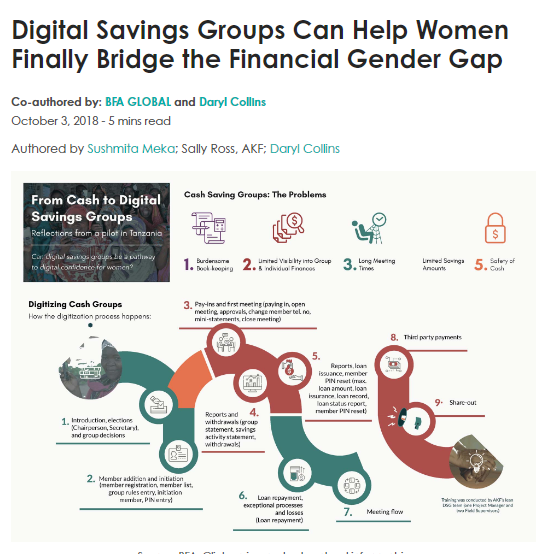
This presentation, featured at the Financial Inclusion Week 2022 organized by the Center for Financial Inclusion, explores key gender and inclusion considerations in the digital savings group (DSG) space and showcases new resources to support safe, inclusive and gender-responsive digitization of savings groups. These include the DSH Hub and the DSG Toolkit published in 2022 by Global Communities and Women for Women International.
Leave a Reply

View all comments

Related Resources

Read
Tool
Data Privacy & Security Digital Inclusion Digital Literacy Digital Transformation
1a. Preparedness COVER
Tool
Data Privacy & Security Digital Inclusion Digital Literacy Digital Transformation

DSG Toolkit: Digital Preparedness Checklist

By Lauren Hendricks, Dennis Mello, Paulina (Paula) Rudnicka
Global Communities, Women for Women International
2022

DSG Toolkit: Digital Preparedness Checklist

This checklist is designed to help implementing organizations gauge their own preparedness to digitize savings groups and to do so in a gender-responsive manner. The checklist will help implementers understand what they need to do to take on the technology, identify required training and support and address gender considerations in digitization projects. These include strategies […]
Read
Research
Digital Inclusion Digital Payments Project Implementation
Research
Digital Inclusion Digital Payments Project Implementation

Pricing and Payments in the Private Service Provider (PSP) Model

By Marc Bavois
Catholic Relief Services
2025

Pricing and Payments in the Private Service Provider (PSP) Model

This study evaluates pricing strategies in CRS’s Private Service Provider (PSP) model across four African countries. It compares flat vs. proportional fees and standard vs. pro-poor training, offering insights into affordability, sustainability, and poverty outreach.