
Research
Project Implementation

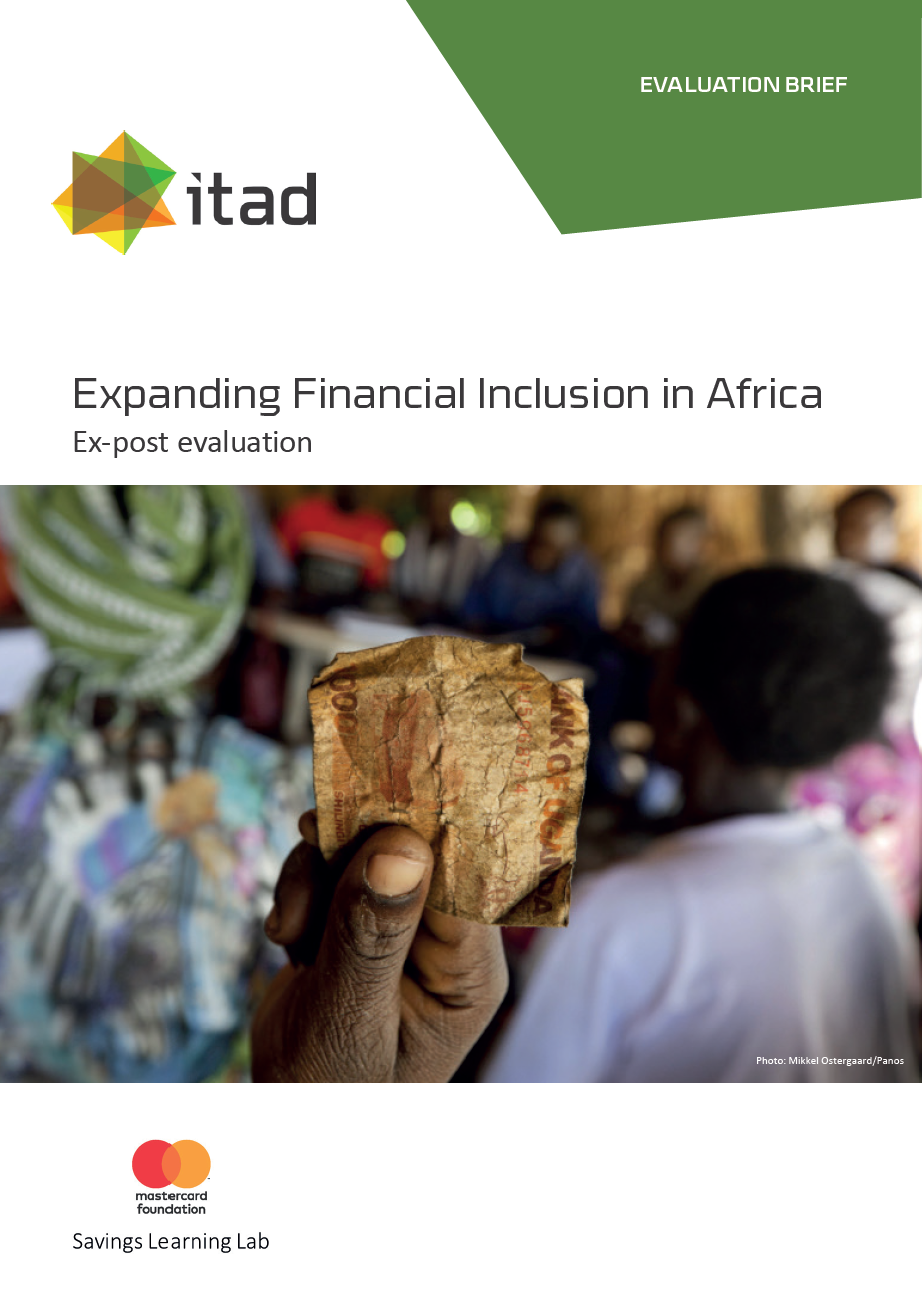
Expanding Financial Inclusion in Africa: Ex-post Evaluation

Published by
2025
Catholic Relief Services, Itad
View Resource

This evaluation brief reviews the Mastercard Foundation-funded Expanding Financial Inclusion in Africa (EFI) program, delivered by Catholic Relief Services and partners in Uganda. The study examines the sustainability of the Private Service Provider (PSP) model 19 months after project closure, finding that PSPs continued to form new SILC groups and that group members maintained access to savings and loans. Key findings include:

  • The number of SILC groups increased by 56% post-project, with most groups reporting higher savings and ongoing activity.
  • PSPs continued to earn income, though payment consistency and strategies varied, and challenges remained in reaching the poorest households.
  • Only half of the PSP networks remained active, with peer support as a key benefit but transportation as a major barrier.
  • Linkages to external stakeholders were limited, though demand for such connections was high.
  • The cost-per-member of the PSP model decreased, demonstrating improved value for money. Recommendations include refining network design, enhancing support for mature groups, and building PSP capacity for consumer protection and quality assurance. The brief concludes that the PSP model is highly sustainable and effective for expanding financial inclusion in rural African communities.
Leave a Reply

View all comments

Related Resources

Read
Research
Digital Inclusion Digital Payments Project Implementation
Research
Digital Inclusion Digital Payments Project Implementation

Pricing and Payments in the Private Service Provider (PSP) Model

By Marc Bavois
Catholic Relief Services
2025

Pricing and Payments in the Private Service Provider (PSP) Model

This study evaluates pricing strategies in CRS’s Private Service Provider (PSP) model across four African countries. It compares flat vs. proportional fees and standard vs. pro-poor training, offering insights into affordability, sustainability, and poverty outreach.
Read
Tool
Digital Financial Services Digital Inclusion Digital Literacy Digital Transformation
DFC
Tool
Digital Financial Services Digital Inclusion Digital Literacy Digital Transformation

Empowering Women on a Journey Towards Digital Financial Capability

By Marina Dimova, Jaclyn Berfond, Sonja Kelly & Whitney Mapes
Women’s World Banking
2021

Empowering Women on a Journey Towards Digital Financial Capability

This guide summarizes key components and concepts in digital financial capability (DFC) and explores key principles in the design of DFC programs. By leveraging the five principles (Who, What, When, Where, and How) and their associated design elements, financial services providers, policy makers, and other stakeholders can help women customers take the journey toward confident […]