DSG Learning Brief U Learn 2022

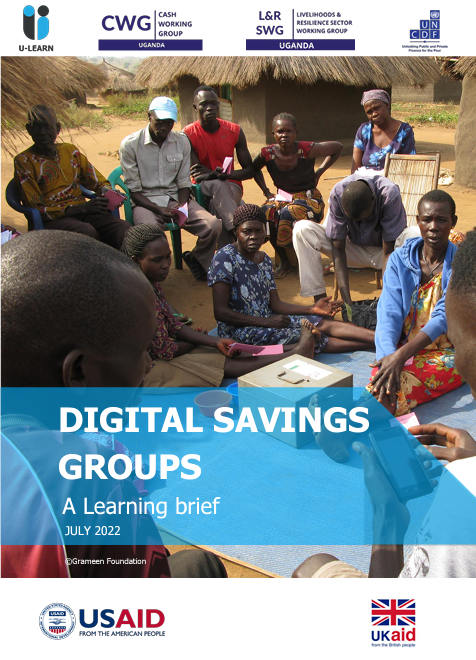
This learning brief offers critical reflections on whether a savings group in the Uganda refugee response is ready to go digital, on the objectives for pursuing digitisation/digitalisation, and on key challenges in making the shift.

The brief was developed by Uganda Learning, Evidence, Accountability, and Research Network (U-Learn) in collaboration with the Uganda Inter-Agency Cash Working Group (CWG), the Livelihoods and Resilience Sector Working Group (LRSWG), and UNCDF as part of an on-going Financial Inclusion Learning Review series.
Leave a Reply

View all comments

Related Resources

Read
Tool
Digital Financial Services Digital Inclusion Digital Literacy Digital Transformation
DFC
Tool
Digital Financial Services Digital Inclusion Digital Literacy Digital Transformation

Empowering Women on a Journey Towards Digital Financial Capability

By Marina Dimova, Jaclyn Berfond, Sonja Kelly & Whitney Mapes
Women’s World Banking
2021

Empowering Women on a Journey Towards Digital Financial Capability

This guide summarizes key components and concepts in digital financial capability (DFC) and explores key principles in the design of DFC programs. By leveraging the five principles (Who, What, When, Where, and How) and their associated design elements, financial services providers, policy makers, and other stakeholders can help women customers take the journey toward confident […]
Read
Brief
Digital Inclusion Digital Transformation Project Implementation
Brief
Digital Inclusion Digital Transformation Project Implementation

Digitalizing Savings Groups in Sierra Leone

By Eric Kaduru, Julia Arnold
CARE
2025

Digitalizing Savings Groups in Sierra Leone

This brief outlines CARE Sierra Leone’s collaboration with MiKashBoks to digitize Village Savings and Loan Associations (VSLAs). Through tailored app development, digital literacy training, and mobile money integration, the initiative improved financial management, safety, and autonomy for women. The pilot reached 81 groups, with plans to expand to 200, offering insights into inclusive digital transformation in low-connectivity contexts.