Data Risks

This resource is designed to help development actors increase the effectiveness of digital tools and data, while reducing the risks and the potential for harm.

We often assume that data protection is the job of informational technology (IT) specialists. IT has a role to play, but so does operations staff. Operations staff determine what data to collect and why, while IT staff help ensure the systems used are as secure as possible. Too often our focus is only on the system, and we forget about reviewing risk in our data decisions.

This tool can be used by anyone to identify the risks – for organizations and end users – of collecting and processing personal data.
Leave a Reply

View all comments

Related Resources

Read
Tool
Data Privacy & Security Digital Literacy Digital Transformation Digitization Planning
DSG Toolkit
Tool
Data Privacy & Security Digital Literacy Digital Transformation Digitization Planning

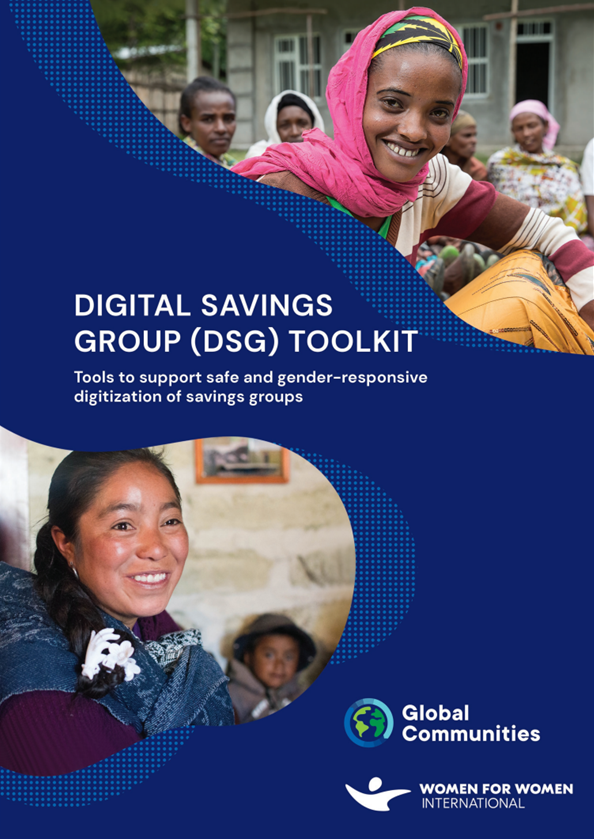
DSG Toolkit: Tools to Support Safe and Gender-responsive Digitization of Savings Groups

By Lauren Hendricks, Dennis Mello, Paula Rudnicka
Global Communities, Women for Women International
2022

DSG Toolkit: Tools to Support Safe and Gender-responsive Digitization of Savings Groups

The DSG Toolkit, also available in Kinyarwanda, consists of seven practical tools to support safe, effective, and gender-responsive digitization of savings groups. These tools include practical guidance for implementers and trainers across multiple aspects of digitization, such as: Each tool can be used by implementers just beginning to think about their first DSG project and […]
Read
Brief
Digital Inclusion Digitization Planning Digitization Risks & Barriers Gender
Brief
Digital Inclusion Digitization Planning Digitization Risks & Barriers Gender

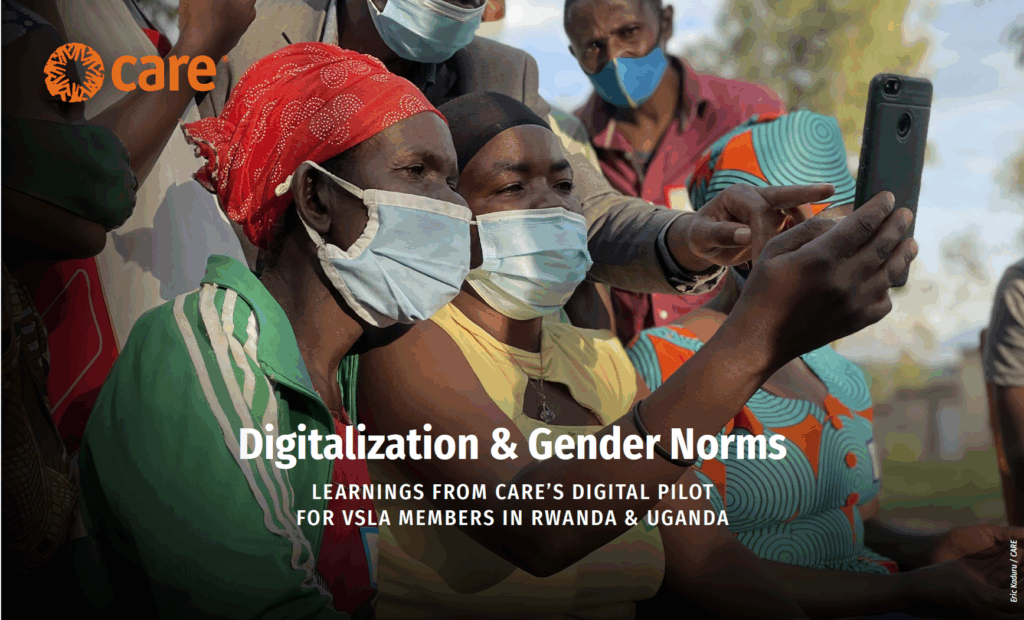
Digitalization & Gender Norms: Learnings from CARE’s Digital Pilot for VSLA Members in Rwanda & Uganda

By Eric Kaduru
CARE
2025

Digitalization & Gender Norms: Learnings from CARE’s Digital Pilot for VSLA Members in Rwanda & Uganda

Insights from CARE’s digital pilot with 100 VSLA groups in Rwanda and Uganda reveal how social norms limit women’s digital access—and what it takes to design safer, more inclusive digitalization efforts.